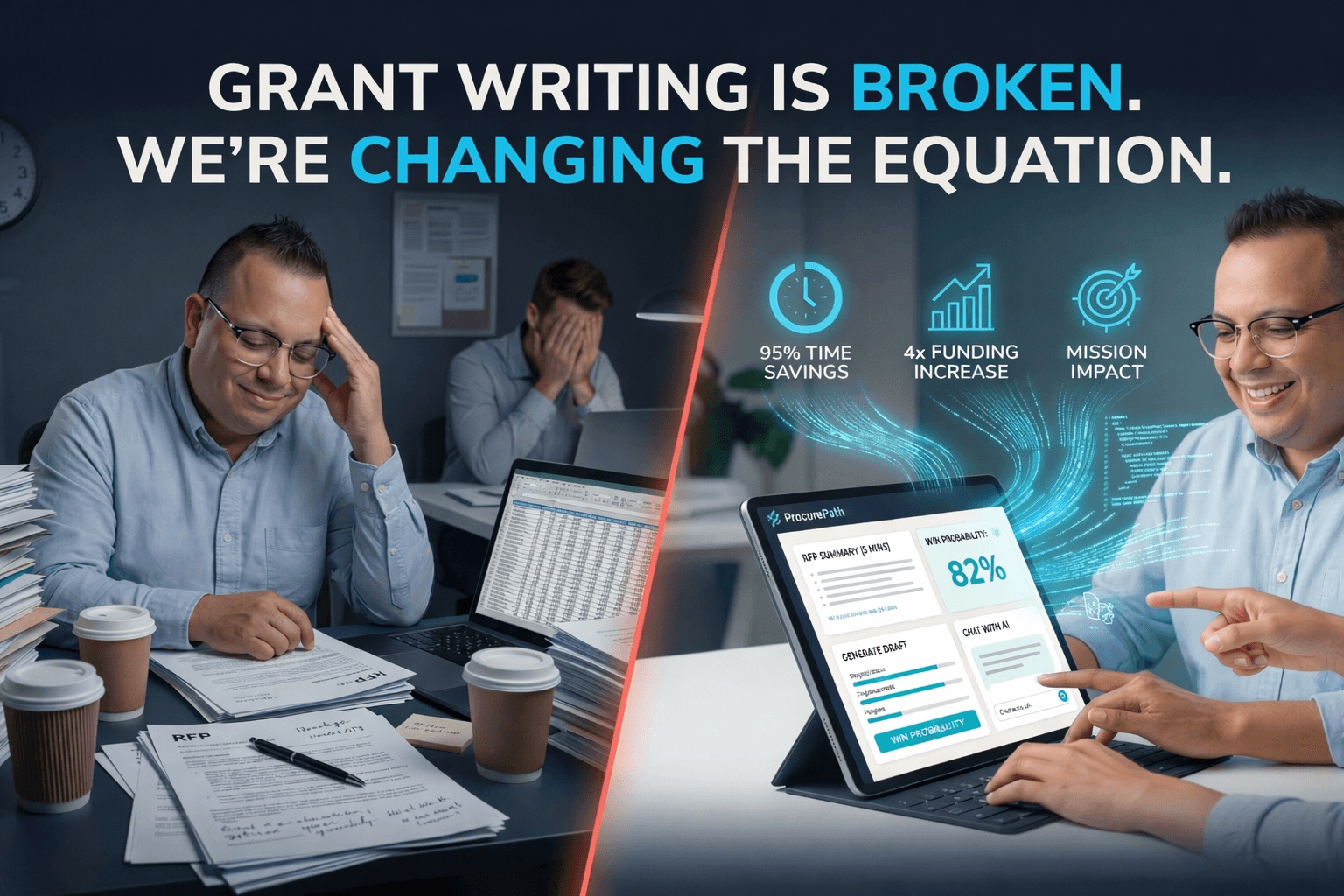
The Grant Writing System is Broken (And AI Actually Fixes It)
I ran two discovery calls this week with nonprofits drowning in grant work.
Same story both times.
Executive directors spending 40+ hours per proposal. Consultant fees hitting $5,000 per grant. Teams guessing which opportunities to chase because they don't know their actual win probability.
And here's the kicker: they're both doing it because the traditional grant writing system is fundamentally broken.
Let me show you what I mean.
The article everyone's sharing this week lists 9 common grant writing mistakes. Missing guidelines. Budget errors. Weak needs statements. Rushed submissions.
But here's what the article misses: These aren't mistakes. They're symptoms.
The real problem? Grant writing was designed for a world where organizations had dedicated staff, unlimited time, and predictable funding cycles.
That world doesn't exist anymore.
What actually happens:
Your ED reads a 47-page RFP at 11pm. Tries to figure out if your org even qualifies. Guesses whether it's worth 40 hours of effort.
Meanwhile your program director is copying and pasting from last year's proposal. Hoping the funder won't notice it doesn't quite fit this year's priorities.
Your finance person is rebuilding the budget from scratch. Again. Because last time's Excel file is on someone's old laptop.
All of this takes weeks. Maybe months if you're chasing federal grants.
And at the end? You submit and pray. Because you have no idea what your actual odds are.
This is what "best practices" looks like in 2026.
Every article says "start early" and "follow the guidelines carefully" and "proofread multiple times."
Cool. When?
When your team is already underwater. When you're choosing between writing grants and actually running programs. When the consultant you can barely afford just sent you a draft that sounds nothing like your organization.
The system isn't broken because people are making mistakes.
It's broken because it assumes unlimited capacity that small orgs don't have.
Here's what good stewardship actually looks like:
Both discovery calls this week ended the same way. We walked through ProcurePath—our AI grant development system built on AWS Bedrock.
Upload the RFP. Get a 5-minute summary of requirements and deadlines.
See your 0-100 win probability score based on your actual organizational fit. Not guessing. Data.
Generate a complete first draft in minutes using your past winning proposals as the foundation. Your voice. Your mission. Your evidence.
Chat with the AI to strengthen sections. Add specific data points. Adjust tone to match the funder's priorities.
Both orgs signed up for our 90-day pilot. No cost. Full access.
Not because they love AI. Because they're exhausted by a system that treats their time like it's infinite.
The "mistakes" the article lists? ProcurePath handles them automatically:
Missed a guideline? The AI flags every requirement before you start writing.
Budget doesn't match narrative? The system cross-checks your numbers as you build.
Weak needs statement? The AI pulls from your outcomes data and past successful proposals.
Rushed deadline? Generate a solid first draft in hours, not weeks.
This isn't about replacing grant writers.
It's about giving your team back the 40 hours per proposal they're currently spending on administrative grunt work.
So they can focus on the parts that actually matter: your mission story, your community relationships, your measurable outcomes.
The parts humans are actually good at.
Real talk:
I've seen both sides of this. The orgs writing grants at midnight. The consultants charging $5K because that's what the market demands for this much labor.
Nobody's the villain here. The system just doesn't work anymore.
ProcurePath changes the equation. Not by lowering standards. By removing the friction that makes quality grant writing feel impossible.
95% time savings. 4x funding increase for early adopters. Not because the AI writes better than humans.
Because it handles the parts that drain your capacity. So you can invest your time where it creates the most impact.
If you're leading a nonprofit:
Ask yourself: How many hours did your last grant proposal take? What could you have done with that time if you had it back?
Then think about what it would mean to cut that time by 95%.
Not someday. Not when you have more staff. Now.
Check out ProcurePath at banyanlabs.io/products/procurepath
We're offering 90-day pilots at no cost because we know the traditional grant writing system is broken. And we think you deserve tools that actually help instead of adding to the overwhelm.
Reference
RJL Solutions. (2025, February 24). Avoid these common grant writing mistakes and increase your chances of success. https://www.rjlsolutions.com/insights/avoid-these-common-grant-writing-mistakes-and-increase-your-chances-of-success